
HR Assessments: Why They Matter and How to Get Started
Imagine this: Your organization is known for its innovation and community impact. It feels like you’re doing everything right, but you suddenly find yourself dealing with unexplained high turnover rates and declining employee engagement and morale.
These issues signal that something is amiss in your HR policies and practices. To reinforce your workplace culture and prevent employee turnover, you need a deep dive into your current HR strategy.
An HR Assessment does just that. However, many organizations either don’t understand what an HR Assessment entails, or they’re so focused on fixing immediate issues that they lack the time to actually address the root cause.
In this guide, we’ll walk you through the need-to-knows of HR Assessments and the benefits of working with an external HR consultant. We’ll cover:
- HR Assessments: Frequently Asked Questions
- How to Conduct an HR Assessment: 8 Steps
- ProspectHR Consulting: A Leading HR Assessment Provider
Let’s get started!
Need an HR Assessment? Let our expert consultants handle the process for you.
HR Assessments: Frequently Asked Questions
What is an HR Assessment?
An HR Assessment is a comprehensive review and evaluation of the overall health and effectiveness of HR within an organization. It focuses on alignment with mission, goals, and growth/downsizing plans; the effectiveness of people practices and systems; gaps in infrastructure/roles/processes; employee experience; culture; and leadership dynamics.
This involves reviewing your organization’s HR policies, initiatives, and practices. Assessments use not only documentation but also strategic conversations with stakeholders, observations, and pattern recognition to uncover insights. In doing so, you can pinpoint areas for improvement, paving the way for sustainable growth, enhanced employee well-being, and organizational success.
Specifically, an HR Assessment:
- Provides a strategic and operational analysis of existing workplace programs and practices
- Evaluates the structures and competencies of an HR department’s workflow, roles, and responsibilities
- Addresses the strengths and gaps in service and how those services align with employees’ needs and the organization’s goals
- Provides actionable recommendations for measurable change
What is the difference between an HR Assessment and an HR audit?
Though HR Assessments and HR Audits are both vital to proper HR department operations, they are quite different:
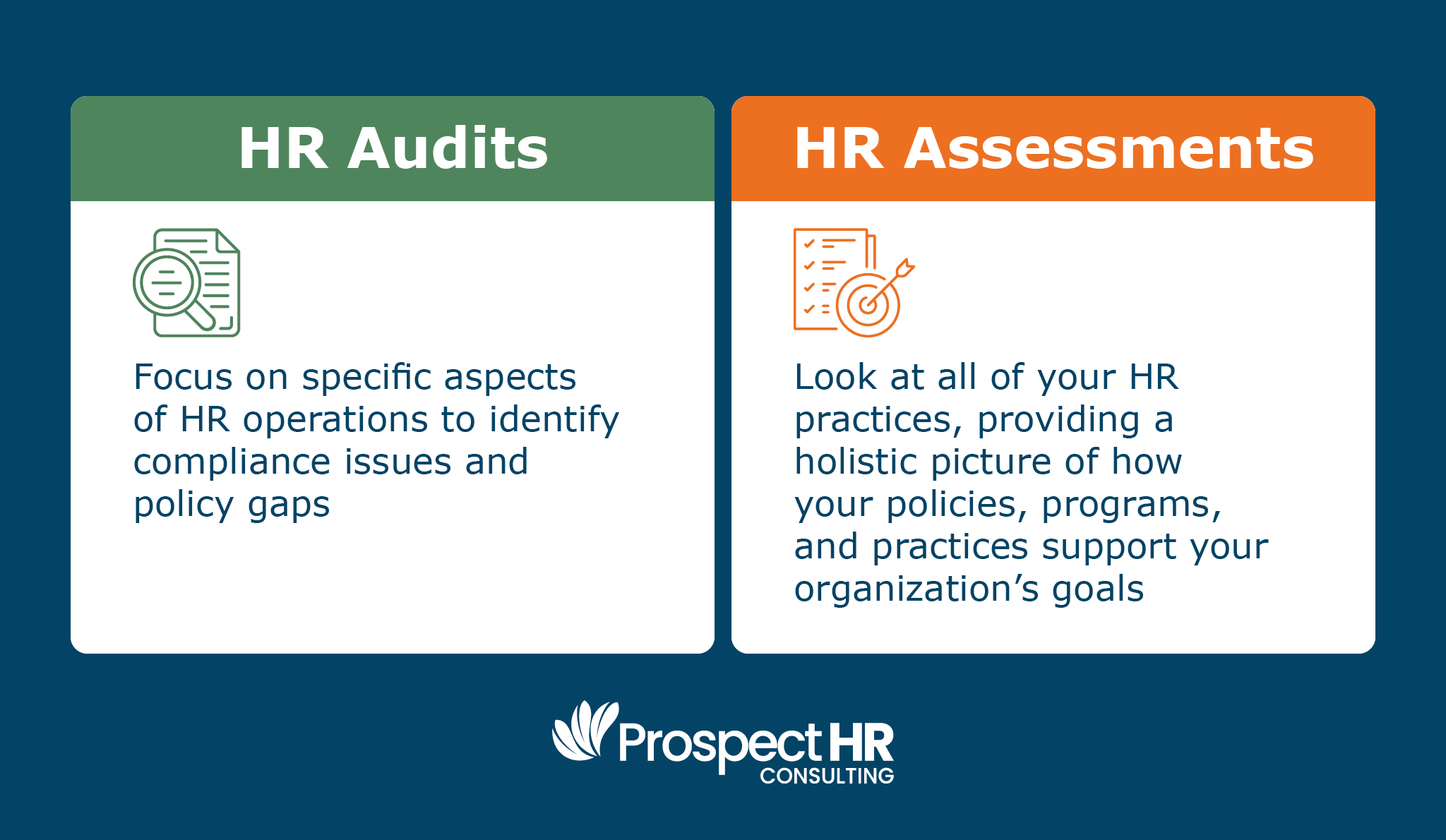
- HR Audits are more checklist-based and focus on specific aspects of an organization’s HR operations (like the recruitment process or performance reviews) to identify compliance issues and policy gaps.
- HR Assessments are more strategy-focused and much broader in scope, examining how HR works across an organization. Going beyond simple compliance and liability concerns, HR Assessments look at how well all the elements of your policies, programs, and practices work together to support current and future organizational goals.
Why are HR Assessments important?
An HR Assessment provides a broad picture of your department’s processes, offering strategic insights to improve cultural alignment, ensure fairness, maintain compliance, and enhance operational efficiency.
What does an HR Assessment typically cover?
During an HR Assessment, your organization will look into:
HR alignment with organizational values
Review your policies, practices, and programs to ensure they reflect your organization’s foundational philosophies. This helps you boost employee engagement, attract the right talent, and bolster your organization’s reputation.
Policy and practice fairness
Equitable and consistent practices prevent accusations of bias while increasing employee morale, performance, and satisfaction.
Program quality and development
Look into programs like:
- Recruitment, hiring, and onboarding processes
- Performance management
- Employee development and training
- Compliance and pay equity
- Diversity, equity, and inclusion (DEI) for all existing and prospective employees
Evaluate these programs’ service quality. If you lack one of these programs, consider developing it to improve employee satisfaction, engagement, and retention.
HR skills, expertise, and resources
Gaps in service delivery are frequently the result of deficiencies in skill, resources, or organization. Consider whether your team needs further education, reorganization, HR-related technology, or new staff.
By identifying and making necessary changes, you can instill trust and confidence in your organization’s current and future HR services.
When should you conduct an HR Assessment?
Conduct an HR Assessment every 2-3 years to evaluate your HR programs’ effectiveness. Additionally, if you notice specific pain points emerging, it may be time to conduct an assessment to resolve the issue. Common pain points include:
- Growth is outpacing infrastructure development
- Significant downsizing has left HR managing increased workloads and dealing with damaged morale
- A merger or acquisition has forced organizational restructuring
- Succession planning conversations are taking place
- Something generally feels “off” with the team
Can I conduct an HR Assessment on my own?
While it is possible for an organization to conduct an HR Assessment internally, it’s usually preferable to bring in an external HR consultant. These outside experts can provide a fresh viewpoint and ensure unbiased results.
What are the benefits of working with an external HR consultant?
External HR consultants like ProspectHR provide a deep understanding of HR best practices and a fresh perspective that lends itself to strategic advisory. Your consultant can look for themes and insights, identify gaps and opportunities, and offer roadmaps for improvement. Plus, often the organizations that need HR Assessments most are the ones that don’t have the time or bandwidth to actually conduct an assessment.
Your consultant team can also:
- Leverage their expertise to generate measurable results and actionable recommendations
- Identify potential blind spots
- Mitigate biases
- Offer objective insights from your employees
- Encourage more transparency in stakeholder interviews
- Help you think outside the box and find creative solutions
While partnering with an HR consulting firm for an assessment requires a financial investment, you’ll receive actionable insights and assistance with implementation that improve your organization without putting too much pressure on your team.
Gain deeper insights by partnering with ProspectHR for your HR Assessment needs.
How to Conduct an HR Assessment: 8 Steps
To get started with your own HR Assessment, follow these steps:
1. Determine your organization’s need for an HR Assessment.
To determine whether it’s time for an HR Assessment, complete the following evaluation:
2. Determine your HR needs and goals.
If your organization would likely benefit from an HR Assessment, start thinking through your exact needs and goals. For instance, you may want to:
- Enhance your recruitment process’s efficiency and quality
- Ensure you’re leveraging supportive technology to its full potential
- Improve your employee retention rates
- Boost employee satisfaction, morale, and productivity
- Develop leadership and management skills
- Ensure compliance with labor laws and regulations
- Refine your performance management process
- Foster a supportive and inclusive culture
Take note of your top priorities and keep these goals in mind throughout your process. Doing so will help you communicate the “why” of your Assessment clearly to stakeholders and guide your decision-making.
3. Consider partnering with an HR consultant.
Working with an external HR consultant that truly understands your organization provides you with professional expertise while ensuring that your assessment is objective. To find a consultant who is a strategic fit, follow these steps:
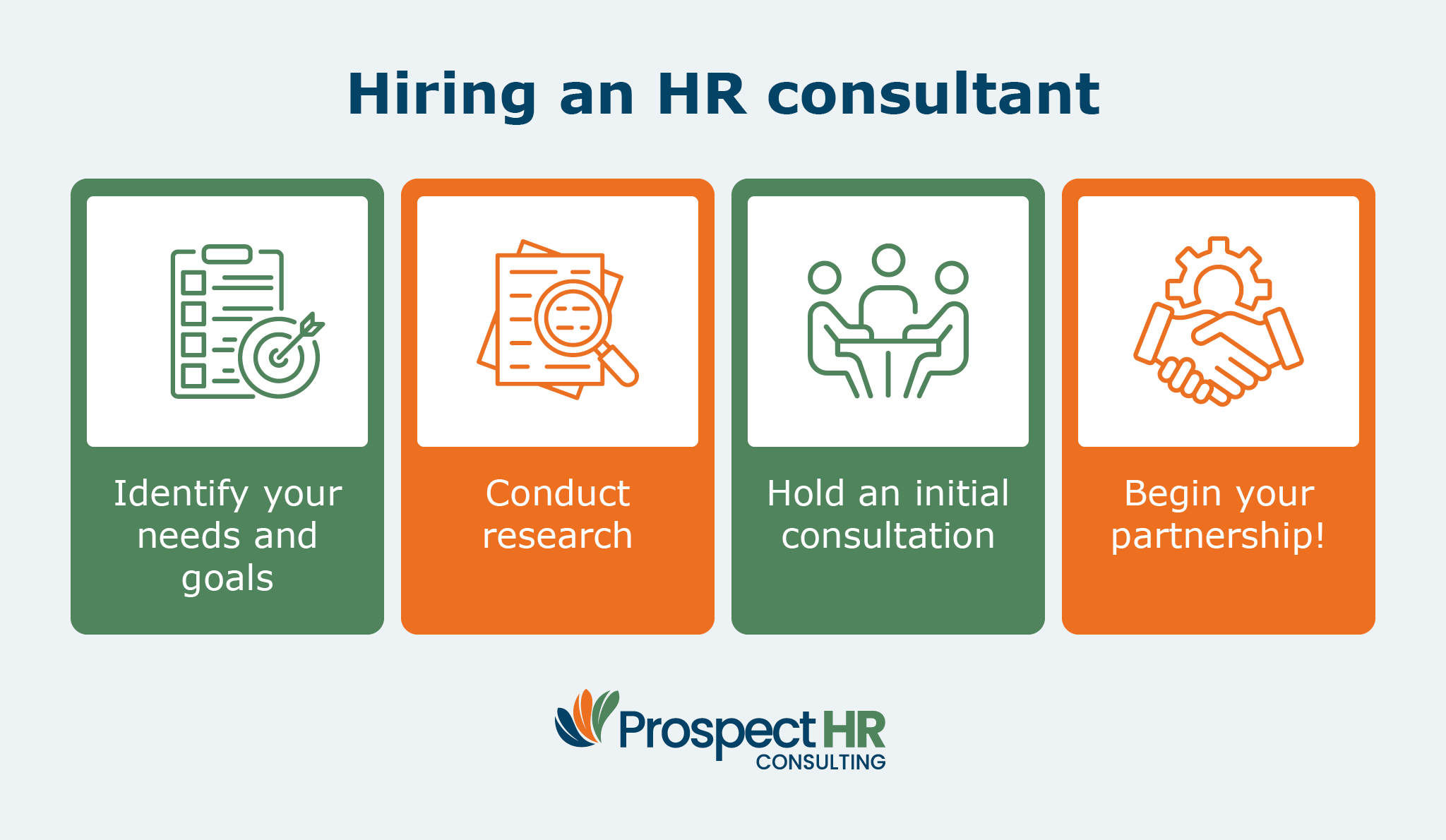
- Identify your needs and goals for working with a consultant. Consider your organization’s budget and timeline restrictions. Use your prioritized list of goals for your HR Assessment as a jumping-off point.
- Conduct research and ask colleagues for referrals. The right partner will demonstrate a commitment to clear communication and leverage their expertise to help your organization implement an action plan.
- Hold an initial consultation with shortlisted candidates. Take notes on how well each consultant matches your organization’s culture and demonstrates an understanding of your goals.
- Execute a contract and begin your partnership! Remember to set clear expectations for reporting and updates.
Finding the right HR consultant now not only expedites and improves your HR Assessment process but also sets the foundation for a long-term relationship that will bolster your HR operations in the future.
4. Ensure you have the tools and resources you need for the assessment.
Once you’ve ironed out who will conduct the assessment, ensure you have the tools and resources necessary to collect information about your current HR services.
Specifically, ensure you have the following on hand:
Tools:
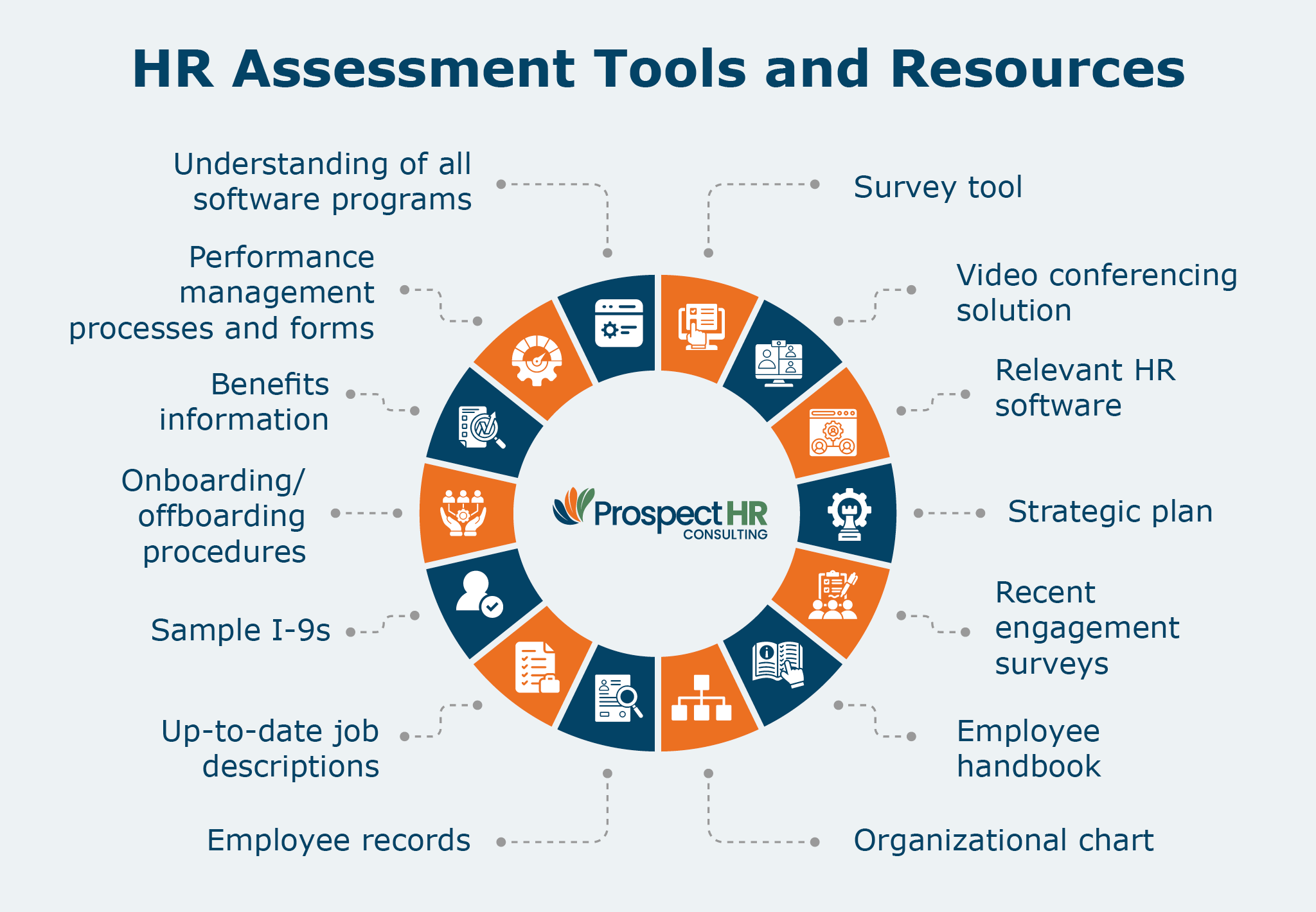
- A survey tool like SurveyMonkey or an equivalent to gather information from your entire employee population or a predetermined subset of employees.
- A video conferencing solution like Zoom for remote interviews, or physical meeting rooms to interview on-site stakeholders (i.e., the current HR team, members of management, employees, HR-related vendors, and board members)
- Relevant HR software, including a comprehensive Human Resources Information System (HRIS), payroll system, etc.
Resources:
The most important resources you’ll need to start your assessment are:
- A strategic plan detailing your organization’s overall goals for the assessment
- Any recent engagement surveys
Additional resources include:
- An employee handbook
- An organizational chart
- A strategic plan
- Employee records, either paper or digital
- Up-to-date job descriptions for each position
- Sample I-9s
- Onboarding/offboarding checklists and procedures
- Benefits information (including summary plan descriptions & communications)
- Performance management processes and forms
- An understanding of all software programs utilized by HR staff
While this is not an exhaustive list, it does reflect the importance of taking an organized approach to HR. Clear records, organized systems storing them, and well-defined roles and departmental contacts will drastically simplify the HR Assessment process.
5. Review key topics and questions for your assessment.
An HR Assessment will cover a lot of ground, so it can be helpful to organize it into key focus areas:
Internal Efficiencies
- Does your internal HR representative or team effectively manage all your HR needs?
- Do employees know who to go to for information and to have issues resolved in a timely manner?
- Does your organization have an effective performance management process?
- How effectively does HR onboard new hires?
Employee satisfaction
- Do your employees feel that HR meets their needs on a timely basis?
- Are your recruitment and termination practices compliant, fair, and equitable?
- What is the onboarding experience like from the new hire’s perspective?
Record-keeping
- Do employment documents and documentation protocols comply with regulatory standards, and how recently have they been updated?
- Are organization charts and job descriptions up to date?
Technology
- Does your organization have the technology to support record-keeping and other HR needs?
- Is there a consistent understanding of your current technology, or is training needed?
Alignment of HR with organizational strategy
- Does HR meet your recruiting needs?
- Do your HR practices support DEI?
- Do current HR practices actively support organizational and departmental goals?
These are just a few of the questions and concerns that an HR Assessment will cover. To dive deeper, you’ll likely need to partner with an HR consultant. The exact scope of your assessment will vary based on your business and your goals.
6. Collect information and conduct a thorough analysis.
With your tools and resources, turn a critical eye to your HR services and collect data about how each one is functioning. Look for trends and patterns in your data to assess problem areas and identify aspects of your program that are working well.
Your conversations with stakeholders will be a large part of your assessment. Ask leadership and staff members how they feel your HR policies align with your organizational goals and what they feel you could be doing better. Inevitably, more questions will arise as you dive deeper, so be prepared to pivot as needed. It may also be helpful to compare your HR policies with industry standards or best practices you see working well at other organizations.
Ultimately, this stage is where you’ll determine what matters most to your organization and what your next steps will be to ensure your HR practices are strategically supporting your overall mission.
7. Use assessment results to develop recommendations and an action plan.
Compare your HR department’s strengths and weaknesses to your HR needs and goals, as well as your organization’s larger goals and mission. This will help you recommend improvements that fit your organization and support its vision for the future.
For instance, you might recommend:
- Developing a more comprehensive onboarding program that extends beyond the first three months of employment
- Offering flexible work arrangements, such as hybrid or remote working options
- Starting a career development program that provides employees with access to training sessions, workshops, and association memberships that support professional aspirations
- Create an anonymous employee feedback system that allows individuals to share suggestions and concerns
- Establish a recognition and rewards program that demonstrates how much your organization values its employees and their efforts
Go further by creating an action plan for these recommendations that outlines the specific steps, timelines, and key players needed to implement them. You should establish clear reporting expectations to monitor your progress toward making these changes.
8. Implement changes to your HR function.
At this point, you and your team or your consultant will put your action plan into play. Monitor the implementation process and course-correct as needed.
Once all changes have been made, evaluate the success of your HR Assessment and the improvements by comparing them against your initial goals and needs. This will help you continue to iterate on the process over time and gain a deeper understanding of your HR practices.
ProspectHR Consulting: A Leading HR Assessment Provider
With ProspectHR, the HR Assessment process is simplified. While every assessment is unique, generally our process looks like this:
- Discuss the needs and goals of your organization, including your available resources, timeline, and primary objectives for your HR Assessment
- Conduct interviews with stakeholders to gain feedback and insight into opportunities for improvement
- Survey employees to expand the depth of feedback received
- Examine HR-related documents, policies, and practices for local, state, and federal compliance, as well as best practices
- Present a detailed report identifying opportunities for improvement and a roadmap that prioritizes items that require immediate attention
- Provide ongoing support to assist in implementation plans
If you have questions about HR Assessments or want to discuss your needs, reach out to our team to learn more. We can offer our expertise and point you in the right direction to successfully improve your organization’s approach to HR!
Need an HR Assessment? Let our expert consultants handle the process for you.
Additional Resources
Conducting an HR Assessment is essential to unlock your organization’s full potential. By gaining a deeper understanding of your HR practices, identifying areas for improvement, and aligning them with your strategic goals, you pave the way for sustainable growth.
Want to keep learning about the world of HR? Check out these resources:
- Performance Reviews: Overview & Tips from HR Experts: Performance reviews are vital to lead a healthy organization and build a culture that encourages growth. Learn more with our ultimate guide.
- Improving Employee Retention: The Savvy Organization’s Guide: High employee retention rates mean increased revenue, productivity, and employee satisfaction. Learn more in this article!
- Employee Coaching: Complete Overview and How-To Guide: Employee coaching is a valuable part of your performance management practices. Learn the basics and explore expert tips in this guide.
Identify and fill the gaps in your HR services.
ProspectHR helps organizations across the nonprofit, corporate, and government sectors to streamline and improve their HR processes.