
Employee Coaching
Complete Overview and How-To Guide
When employees thrive, organizations thrive too. Investing in professional development through employee coaching creates a culture where people feel valued, supported, and empowered to do their best work.
A commitment to an employee coaching model empowers coaches and employees to build a partnership focused on solving problems, setting goals, accomplishing tasks, and enabling employees to discover new skills and strengths.
This guide is designed to help you embed employee coaching into the everyday culture of your organization. Not just as a one-time initiative, but to establish a developmental culture with an ongoing commitment to your people. We’ll cover:
- Employee Coaching FAQ
- Why it Matters: Building a Coaching Culture Centered Around Employee Development
- Employee Coaching Tips from HR Experts
- How HR Consultants Can Help
Whether you’re just getting started or looking to deepen an existing program, this guide will help you build coaching into your organizational culture.
Looking to develop or improve your employee coaching process?
We can help.
Employee Coaching FAQ
1. What is employee coaching?
Employee coaching is a partnership between employees and coaches that is designed to support career development and upskilling, as well as employee performance, engagement, and satisfaction, all of which contribute to personal and organizational success. Employee coaching is an ongoing, interactive process that guides employees toward their professional and personal goals.
Instead of dictating to employees how they should accomplish a task or goal, coaches collaborate with employees by asking open-ended questions to support confidence building and decision making. They practice active listening and provide assurance when needed. The goal is to motivate the employee and empower them to have the confidence to reach their full potential.
2. What is the difference between employee coaching and mentoring?
Mentors draw from their personal experience and provide specific direction, while coaches focus on individual employee discovery. Typically, employees have mentors who are other individuals at their organization, while coaches should be external, unbiased experts.
3. What are the types of employee coaching?
Employee coaching is personalized and can take many forms. The types of coaching you pursue will depend on your desired organizational and employee growth outcomes. A few examples of coaching programs include:
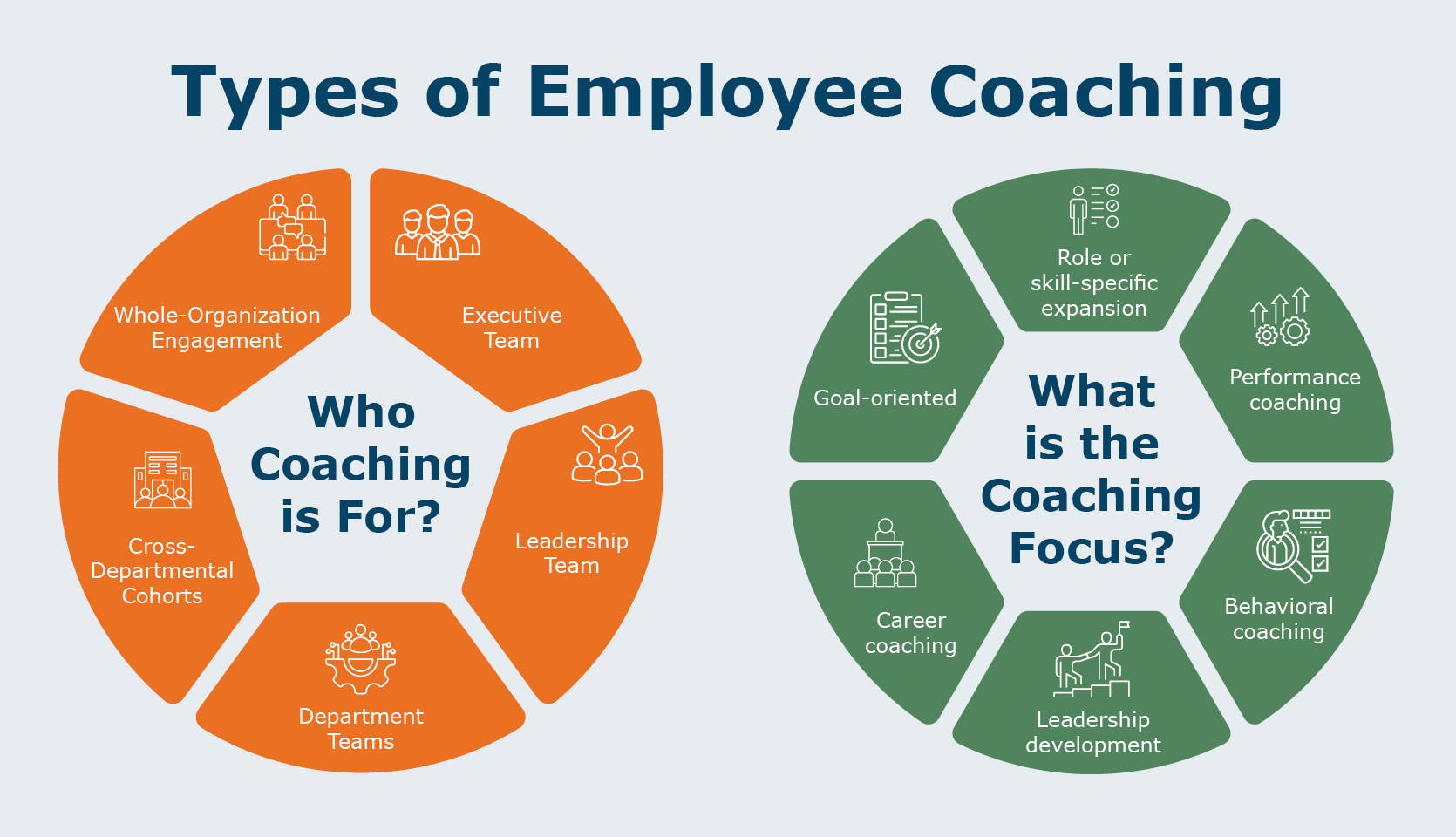
- Executive Team
- Leadership Team
- Department Teams
- Cross-Departmental Cohorts
- Whole-Organization Engagement (for smaller teams)
These types of engagements focus on different groups within your organization, providing them with unique development paths that fit their roles. Alternatively, some types of coaching center on specific skills and behaviors, regardless of position, such as:
- Role or skill-specific expansion
- Performance coaching
- Behavioral coaching
- Leadership development
- Career coaching
- Goal-oriented
Coaching can motivate employees at any level to develop new skills, take on new challenges, and broaden their personal and professional goals.
4. What are the benefits of effective employee coaching?
Effective employee coaching centers the employee in the process and the solution. When people feel genuinely supported in their development, the results are real and lasting. Organizations should expect to see benefits like:
- Increased employee commitment to the organization
- Improved trust between employees and their coaches
- Improved employee skills
- Increased employee productivity and creativity
At its core, coaching gives employees the practical skills they need to grow in their careers, alongside the emotional and psychological safety to take risks, ask questions, and grow. That sense of security and investment naturally deepens their commitment to the people and the organization around them.
5. Who is involved in employee coaching?
Typically, a manager or supervisor will coordinate with their organization’s HR team to bring in an external consultant who specializes in coaching for the particular need. This means that the individuals involved in coaching usually include:
- Managers who identify employees interested in coaching and align with them on target growth areas
- HR professionals who consider various coaches and select one based on their organization’s needs and the coach’s credentials
- The employee who is being coached
- The external coach who is trained to provide a collaborative coaching partnership that is aligned with the organization and the employee’s professional development goals
6. What do you need to get started with coaching?
Each company is unique, so introducing employee coaching may look different across organizations. The size, structure, culture, and availability of resources—people and financial—will impact how an organization incorporates employee coaching into its people development plan.
However, despite these distinctions, there are some central criteria every successful employee coaching program needs:
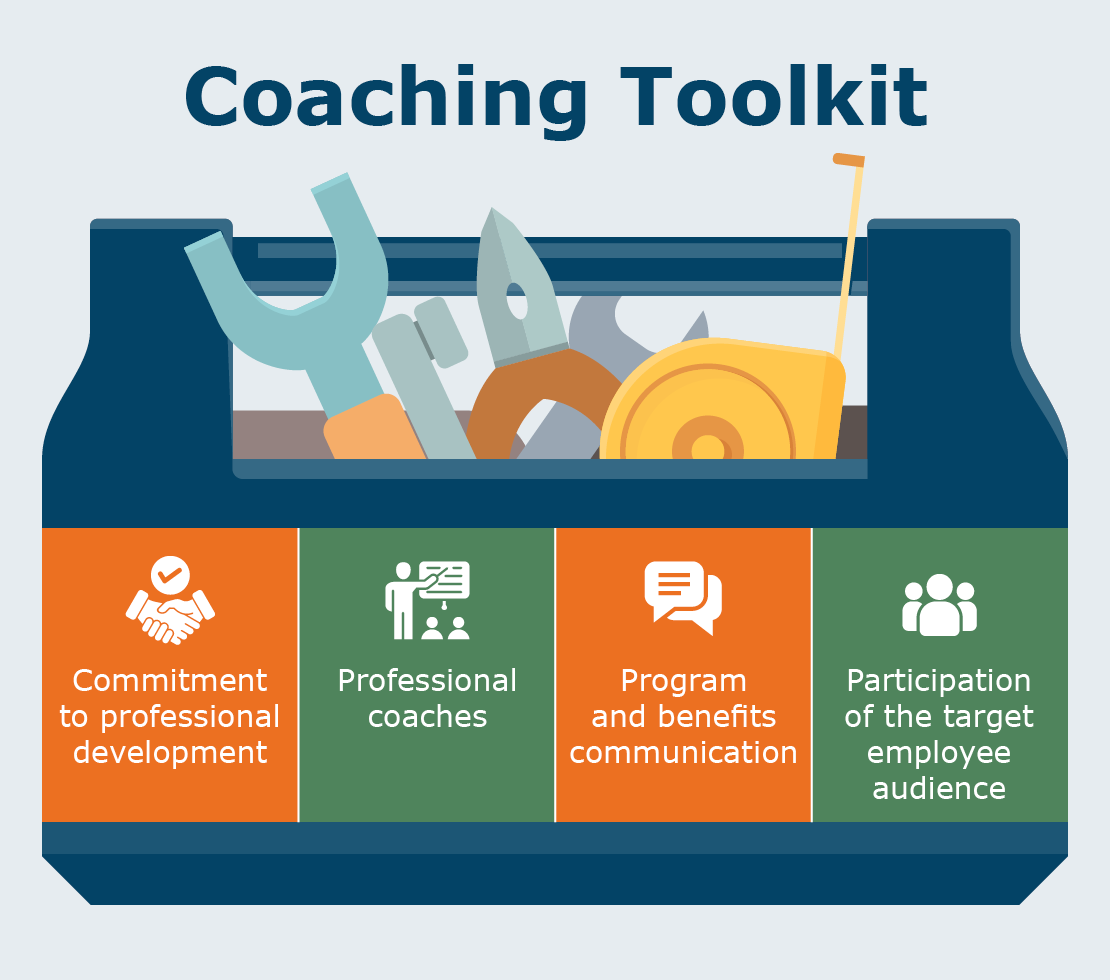
- Commitment to professional development
- External coaching professionals who can provide support confidentially and without bias
- Communication describing the program and its benefits to employees
- Participation of the target employee audience
With these elements, an organization can develop or expand its professional development offerings to include coaching and set itself up to earn a more satisfied, engaged, and productive workforce that boosts the organization’s success.
Why It Matters: Building a Coaching Culture Centered Around Employee Development
Coaching isn’t a program you roll out once. It’s a practice you build into how your organization operates day to day. When coaching and ongoing employee development become part of your culture, employees experience continuous growth, stronger relationships, and a deeper sense of purpose in their work.
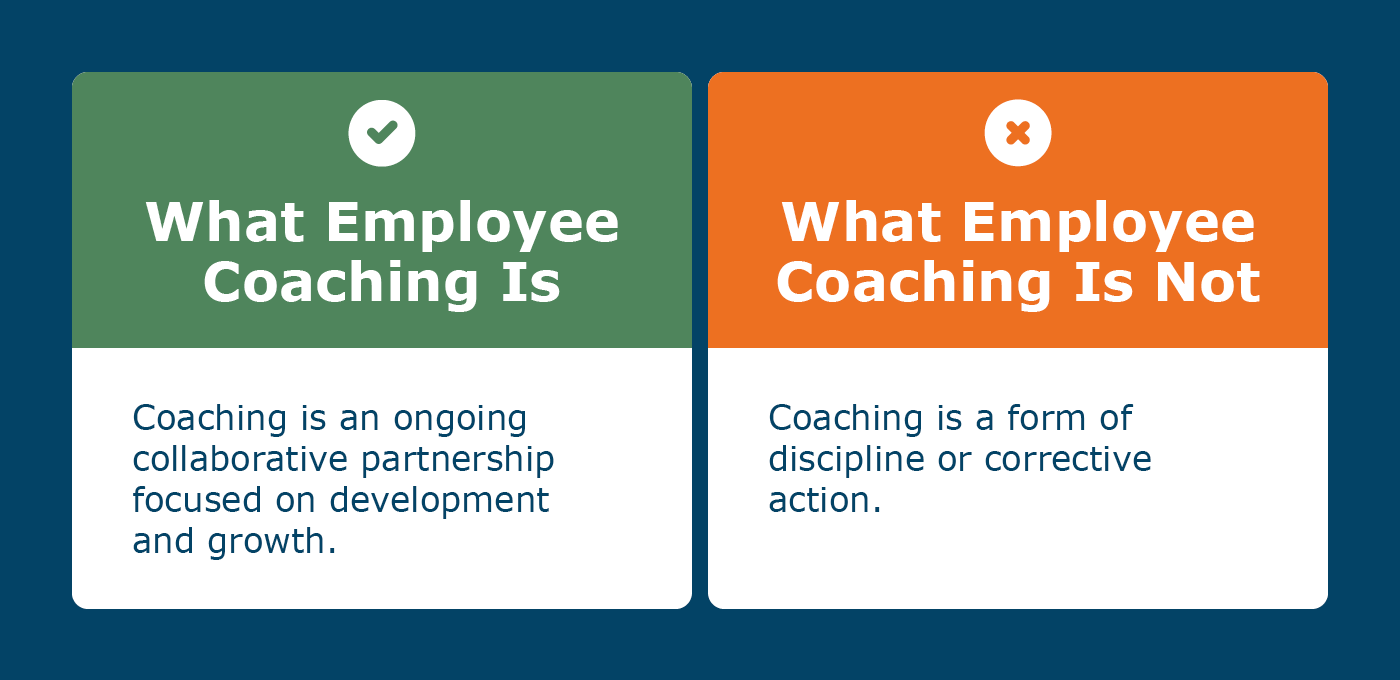
What Employee Coaching Is
Coaching is an ongoing collaborative partnership focused on development and growth.
With coaching tailored to employees’ unique strengths, goals, and learning styles, employees develop new skills, gain confidence in their roles, and find greater meaning in their work. When employees feel seen, heard, and invested in, that experience of growth creates a culture of continuous improvement that benefits every layer of the organization.
What Employee Coaching Is Not
A common misconception is that coaching is a form of corrective action.
Some employees and managers may see it as a way of gently disciplining employees, enabling managers to avoid supervising their staff and preventing employees from pushing back against management directives. These perceptions are false.
Coaching is a collaborative process where all parties are invested in the employee’s growth. When approached with intention, it becomes one of the most powerful ways an organization can signal to its people: we believe in you, and we’re here to help you thrive.
Employee Coaching Tips from HR Experts
Employee coaching requires structure but is also a fairly personalized process. Best practices need to be adapted and curated to meet each employee’s goals and needs.
However, there are a number of takeaways that generally apply to employee coaching, no matter the setting:
- Coaching is a process. Unlike other performance management initiatives, employee coaching is not a single occurrence. Coaching occurs over time, by following a long-term plan and taking advantage of teachable moments along the way. In many workplaces, employee coaching is a habit sewn into the fabric of the corporate culture.
- Coaching is a partnership. Employee coaching is not a teacher-pupil model. This mechanism thrives on open communication and the give-and-take between coach and employee. Trust in the process and the commitment of all parties is fundamental to success.
- Employees must agree to participate. Without employee buy-in, there cannot be partnership and collaboration. Some employees resist because they are uncomfortable with change or not open to constructive conversation. This connection cannot be forced. It must be developed over time by educating employees about the benefits of this performance development approach.
- Listening is key. Active listening is a skill, and the best coaches quickly grasp its importance. The point of coaching is to encourage employees to take the lead on developing the plan of action, not to tell them how things should be done.
- Effective coaching plans are individualized. Every employee has different skills, knowledge, motivators, and goals. Each coaching plan should leverage those factors to support each employee’s growth.
- Provide direction, not answers. The coach’s role is to facilitate growth and learning. Coaches ask the right questions to help employees work through issues and should jump in only when employees are stuck. With their coaches’ support, employees determine the course taken to solve the problems at hand.
- Use employee coaching to manifest how individual and organizational goals align. Goal identification discussions can help employees see the link between their personal success and their employer’s. Understanding how one feeds the other affirms upper management’s commitment to employee success and often leads to greater job satisfaction and deeper bonds with the employer.
- Coaching can promote growth in a number of areas. Coaching techniques benefit organizations across departments and with a variety of employee development targets. For example, coaching can help employees step up from one competency to another, move to a new assignment, improve performance and work habits, and accept organizational change. There is no limit to how an organization can incorporate coaching into its strategic people plans.
When designing an employee coaching scheme to suit your business needs, these points are a good place to start.
How HR Consultants Help
Building a coaching culture looks different in every organization, and that’s by design. The right approach depends on your size, your people, and where you are in your development journey. Some organizations have the internal expertise to lead this work themselves, while others benefit from a knowledge partner to help shape and sustain the effort.
An HR consultant can help you build a coaching practice that genuinely serves your employees and is well-matched, well-structured, and woven into your organization’s people development. Support can be as focused or as comprehensive as you need.
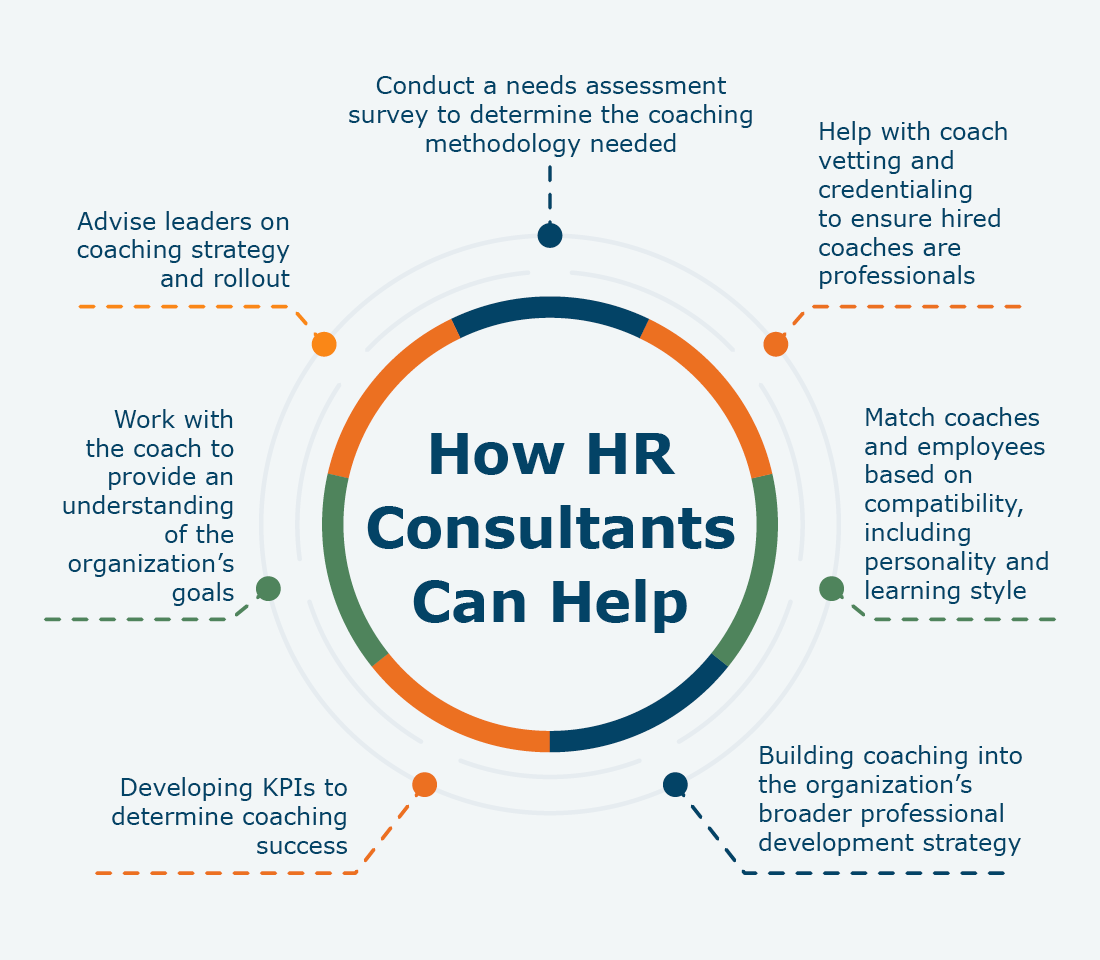
- Conduct a needs assessment survey to determine the coaching methodology needed
- Help with coach vetting and credentialing to ensure hired coaches are professionals
- Match coaches and employees based on compatibility, including personality and learning style
- Building coaching into the organization’s broader professional development strategy
- Developing KPIs to determine coaching success
- Work with the coach to provide an understanding of the organization’s goals
- Advise leaders on coaching strategy and rollout
The team at ProspectHR Consulting brings deep experience, helping organizations build cultures that put people first. Whether you’re just beginning to explore employee coaching or looking to strengthen an existing approach, we partner with you to design a program that meets your employees where they are and helps them get to where they want to be.
For more information on related HR topics, explore these ProspectHR resources:
HR experts can review, improve, and support how your organization coaches employees.
Want to learn more?