

Setting employee compensation isn’t easy, especially in today’s ever-evolving market. Organizations must balance limited budgets with the need to stay competitive in a constantly changing job market. At the same time, leaders must ensure pay is fair across the organization while keeping pace with market trends, pay transparency laws, and the rising cost of living.
For small and midsize businesses, the challenge is even greater. While budgets may be tighter than those of larger competitors, candidates’ salary expectations aren’t. Paying too little can make it difficult to attract and retain qualified employees. Paying too much can strain payroll budgets and make long-term growth harder to sustain.
The good news is that compensation decisions don’t have to rely on guesswork. Compensation benchmarking gives organizations access to reliable market data so they can develop salary ranges that are competitive, equitable, and aligned with their business goals.
At ProspectHR Consulting, we’ve helped organizations across a variety of industries build compensation strategies that support hiring, retention, and long-term success. In this guide, we’ll cover:
- Compensation Benchmarking FAQs
- How to Conduct Compensation Benchmarking: 5 Steps
- How an HR Consultant Can Help
Create a data-backed, human-centered compensation strategy.
Compensation Benchmarking FAQs
What Is Compensation Benchmarking?
Compensation benchmarking is the process of comparing your organization’s pay rates against market data for similar positions to see how they stack up. This helps determine if your compensation is competitive, fair, and aligned with your business goals.
Organizations use compensation benchmarking to establish salary ranges, evaluate current compensation practices, and make informed decisions about hiring, promotions, and employee retention. Rather than relying on assumptions or outdated salary information, benchmarking provides objective market data that helps employers make confident compensation decisions.
Before conducting compensation benchmarking, it’s helpful to understand a few related terms.
Compensation Philosophy
A set of guiding principles that defines how an organization approaches employee pay. It answers questions such as:
- Do we want to lead the market with higher salaries?
- Do we aim to match market rates?
- What is our total rewards strategy? Are we willing to offer lower salaries in exchange for exceptional benefits, flexibility, or career growth opportunities?
Salary Surveys
One of the primary sources of compensation benchmarking data. These surveys collect compensation information from thousands of organizations and organize it by factors such as job title, industry, location, and company size.
Organizations often purchase salary surveys from reputable compensation data providers or access them through professional associations and HR consulting firms. Compared to free online salary estimates, professionally developed surveys typically provide more reliable and comprehensive market insights.
Compensation Percentiles
Salary surveys often organize compensation data into percentiles, which show how pay compares to the broader market. Organizations use these percentiles to establish salary ranges that align with their compensation philosophy. For example, the 50th percentile represents the market median, while organizations looking to attract highly specialized talent may target higher percentiles.
What Data Is Included in Compensation Benchmarking?
Compensation benchmarking relies on salary survey data, but effective benchmarking goes beyond comparing job titles and average salaries. The most valuable insights come from evaluating organizations and positions that closely resemble your own.
Several factors influence how compensation data is collected and interpreted.
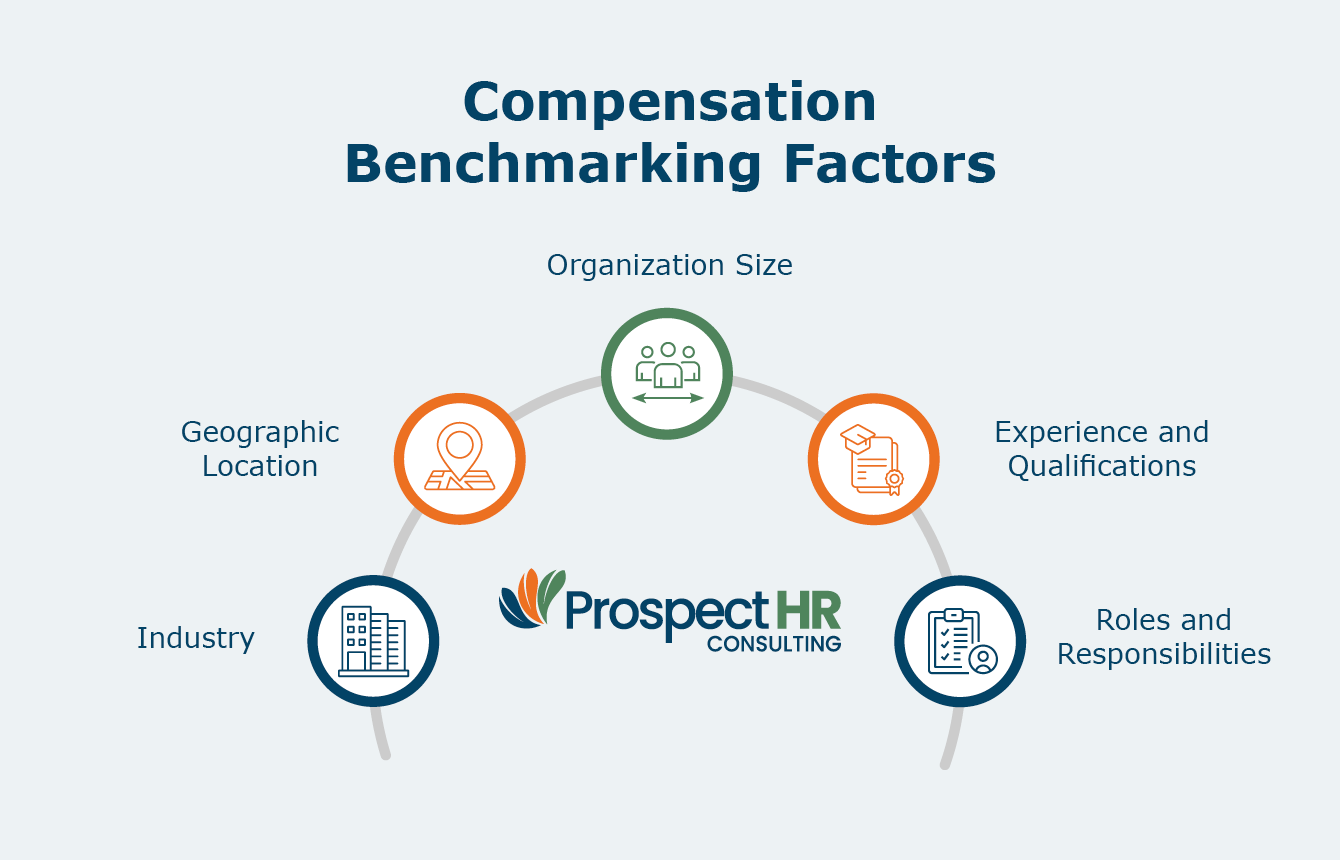
Industry
Compensation can vary significantly between industries, even for similar positions. For example, an accountant working in healthcare may have a different salary range than an accountant in manufacturing or technology due to differences in demand, regulations, and business needs.
Geographic Location
Labor markets differ across geographies. Organizations located in large metropolitan areas or high-cost-of-living regions often offer higher salaries than employers in rural communities. Remote work has expanded hiring markets, but cost of living continues to play an important role in compensation decisions.
Organization Size
Comparing compensation between similarly sized organizations typically produces more meaningful benchmarking results.
Experience and Qualifications
The best competitive benchmarking goes beyond the job title. It should account for the qualifications required to perform a specific role, including years of experience, education, certifications, and specialized training.
Roles and Responsibilities
Perhaps most importantly, organizations should compare positions based on responsibilities rather than titles. Two employees with the same title may oversee very different teams, budgets, or strategic initiatives.
By considering these factors together, organizations can develop salary ranges that accurately reflect today’s market while accounting for their unique business needs.
What Are the Benefits of Compensation Benchmarking?
Setting competitive pay ranges is often the first goal of compensation benchmarking, but it’s far from the last. The same market data that helps establish salaries can also guide long-term decisions about hiring, retention, and compensation strategy.
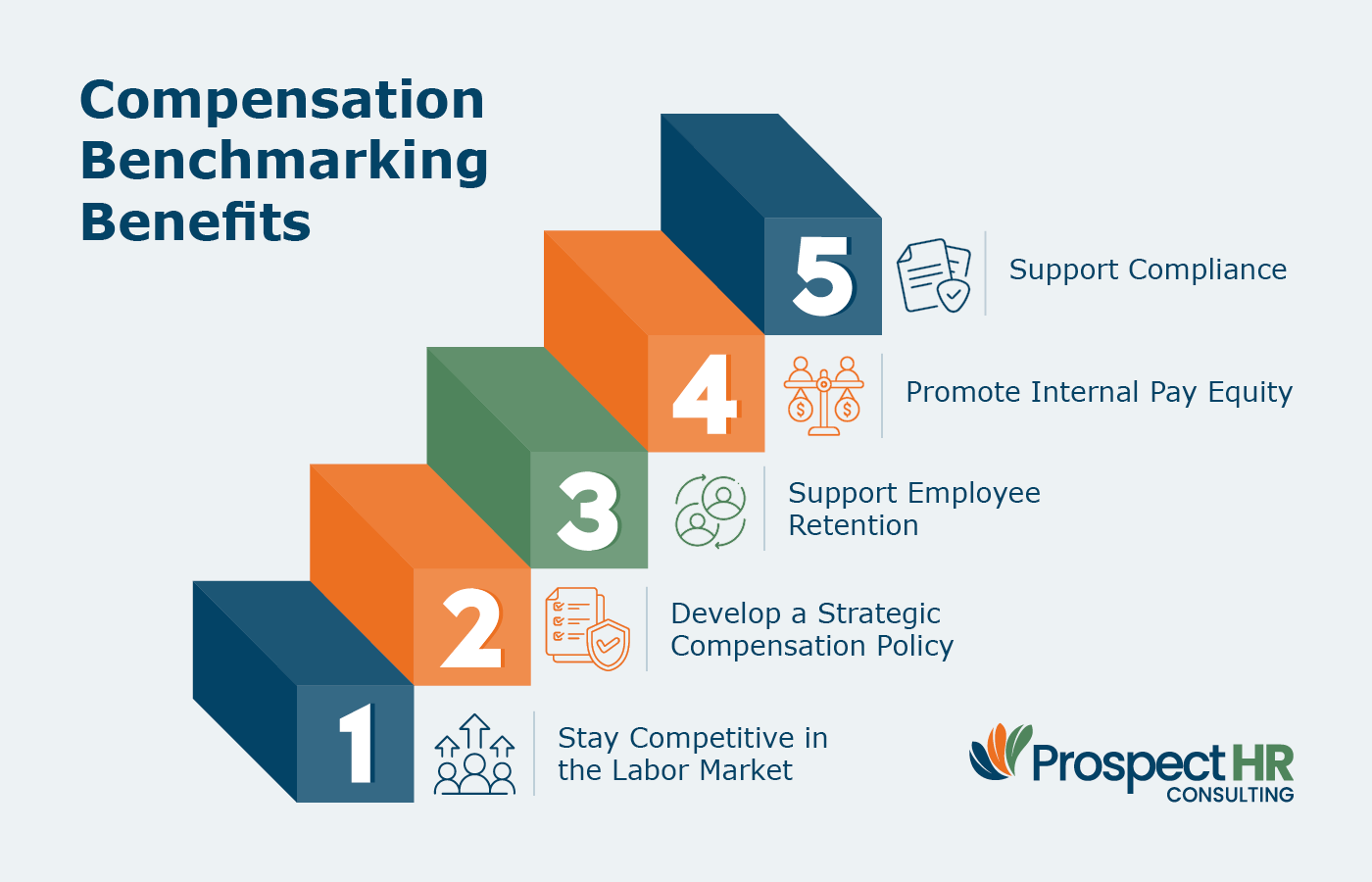
Stay Competitive in the Labor Market
The hiring market changes constantly. Benchmarking helps organizations identify positions experiencing rapid salary growth so they can adjust compensation strategies before recruitment or retention becomes a challenge.
Develop a Strategic Compensation Philosophy
Market data gives leaders the information they need to make intentional compensation decisions. Some organizations choose to pay above market to attract specialized talent, while others target median salaries and differentiate themselves through benefits, flexibility or career development opportunities.
Benchmarking provides the data needed to support whichever strategy best aligns with organizational goals.
Support Employee Retention
Employees who believe they are paid fairly are generally more likely to remain with an organization. Regular compensation benchmarking helps identify pay gaps before they contribute to turnover, disengagement, or recruitment challenges.
Promote Internal Pay Equity
Benchmarking isn’t just about external competitiveness. It also gives organizations an opportunity to review internal compensation practices and identify inconsistencies between employees performing similar work.
Support Compliance
While compensation benchmarking isn’t always required by law, reliable market data can help organizations support compensation decisions, develop defensible salary ranges, and navigate evolving pay transparency requirements and other compensation-related regulations.
Ultimately, compensation benchmarking helps organizations make informed decisions instead of reactive ones.
How to Conduct Compensation Benchmarking: 5 Steps
Conducting compensation benchmarking requires more than purchasing a salary survey. Organizations should take time to prepare internally, gather reliable data, and develop a strategy that aligns with their long-term business goals.
1. Identify Roles That Need Benchmarking
Before collecting market data, determine which positions should be included in your benchmarking project. The roles you benchmark will depend on your organization’s goals. For example, you may choose to benchmark:
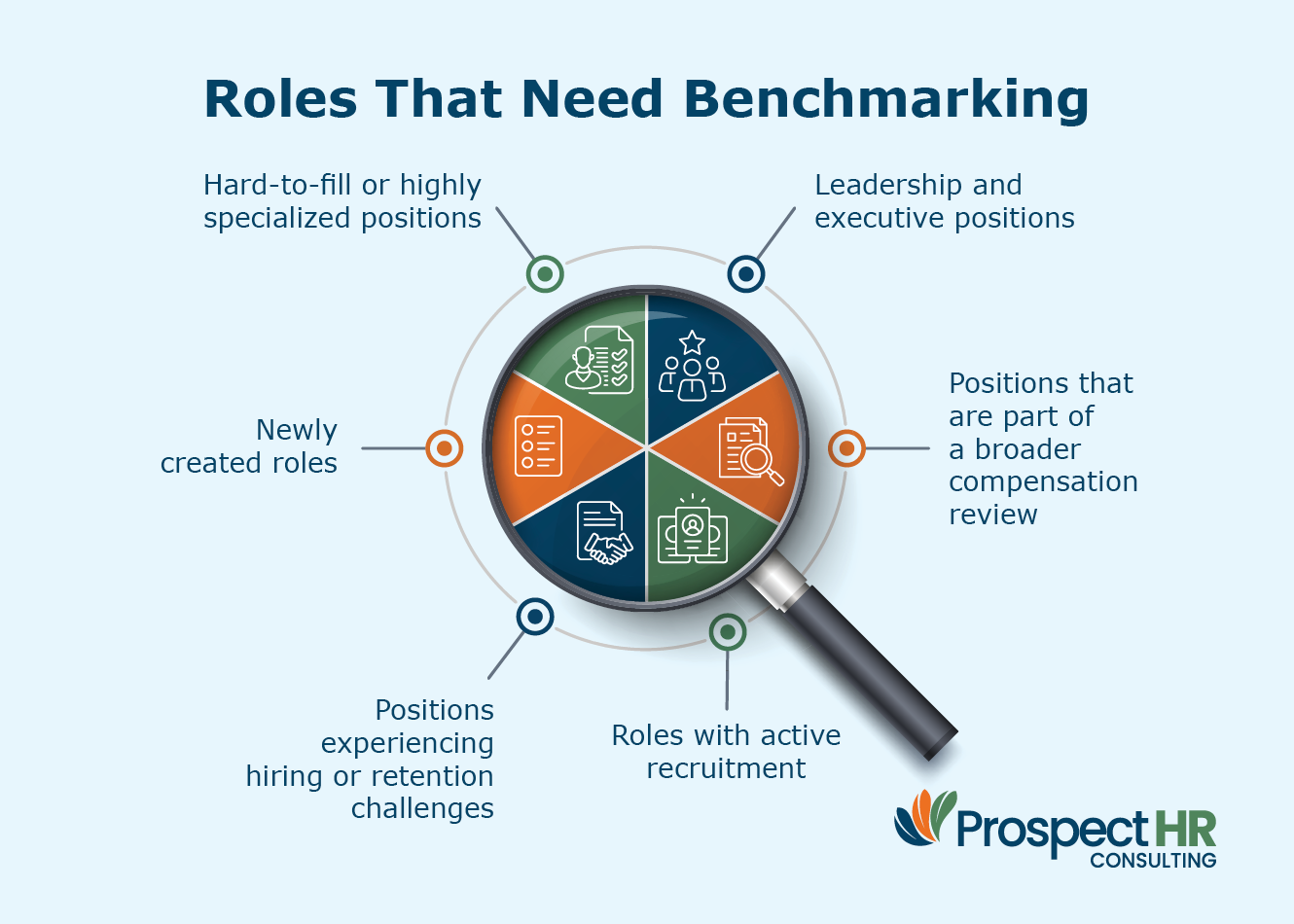
- Roles they are actively recruiting for
- Positions experiencing hiring or retention challenges
- Newly created roles
- Hard-to-fill or highly specialized positions
- Leadership and executive positions
- All positions that are part of a broader compensation review
This is also the ideal time to revisit your compensation philosophy. Understanding your organization’s compensation goals will help determine how benchmarking data should be interpreted and applied.
2. Gather Reliable Compensation Data
Don’t believe everything you read online. Free salary websites can be useful for general research, but they shouldn’t be the foundation of your compensation strategy. Reliable compensation benchmarking starts with reputable salary surveys and high-quality market data that accurately reflects your industry, location, and workforce.
Consider the following best practices:
- Partner with a reputable salary survey provider.
- Participate in industry associations that collect compensation data.
- Review multiple salary surveys to compare results.
- Confirm that survey data reflects current market conditions.
- Work with an experienced HR consultant who can interpret compensation data accurately.
Remember: the quality of your benchmarking process depends on the quality of the data you collect.
3. Compare Internal Positions to the Market
Once you’ve gathered compensation data, compare it carefully to your organization’s positions.
Avoid relying solely on job titles. Responsibilities, reporting structures, and required qualifications often vary widely between organizations. For example, a “Marketing Manager” at one company may oversee a team of ten employees and manage a multimillion-dollar budget, while the same title at another organization may describe an individual contributor.
Organizations should evaluate factors such as:
- Job responsibilities
- Required education and certifications
- Years of experience
- Industry
- Organization size
- Geographic location
Many employers also use compensation percentiles to establish salary ranges based on their compensation philosophy and hiring objectives.
4. Turn Your Findings into a Compensation Strategy
Benchmarking data is only valuable if it’s translated into action.
Organizations should summarize their findings in a compensation benchmarking report that identifies market trends, highlights potential pay disparities, and recommends next steps.
These insights can be used to:
- Develop or update salary ranges
- Improve hiring and recruitment strategies
- Prepare for salary negotiations
- Budget for future compensation increases
- Align pay practices with the organization’s compensation philosophy
Once compensation decisions have been made, it’s important to communicate that to your team. Whether you’re adjusting salaries, introducing new pay ranges, or simply reaffirming your existing compensation approach, transparency helps build trust and reduce confusion.
Explain how compensation decisions were made, why changes are being implemented, and what employees can expect moving forward. Even if adjustments can’t happen immediately, open communication demonstrates a commitment to fair, consistent compensation practices.
5. Document the Process
Compensation benchmarking should be an ongoing process—not a one-time project.
Documenting your methodology makes it easier to repeat future benchmarking efforts, evaluate past decisions, and maintain consistency across the organization.
Best practices include:
- Recording which positions were benchmarked
- Documenting data sources used
- Saving salary survey information
- Tracking compensation decisions
- Establishing a schedule for future reviews
While there is no universal standard, many organizations conduct compensation benchmarking annually or whenever significant labor market changes occur. Organizations experiencing rapid growth or frequent hiring may choose to review compensation more often.
How an HR Consultant Can Help
Knowing the competitive benchmarking process and having the time and expertise to execute it are two different things. Without the right approach, it’s easy to draw the wrong conclusions… or spend hours gathering data that isn’t relevant.
ProspectHR simplifies the process by handling the research, analysis, and strategy, so you can make confident compensation decisions without adding another project to your plate.
At ProspectHR, we help organizations develop compensation strategies that are data-driven, practical, and aligned with long-term business goals. Our consultants can help you:
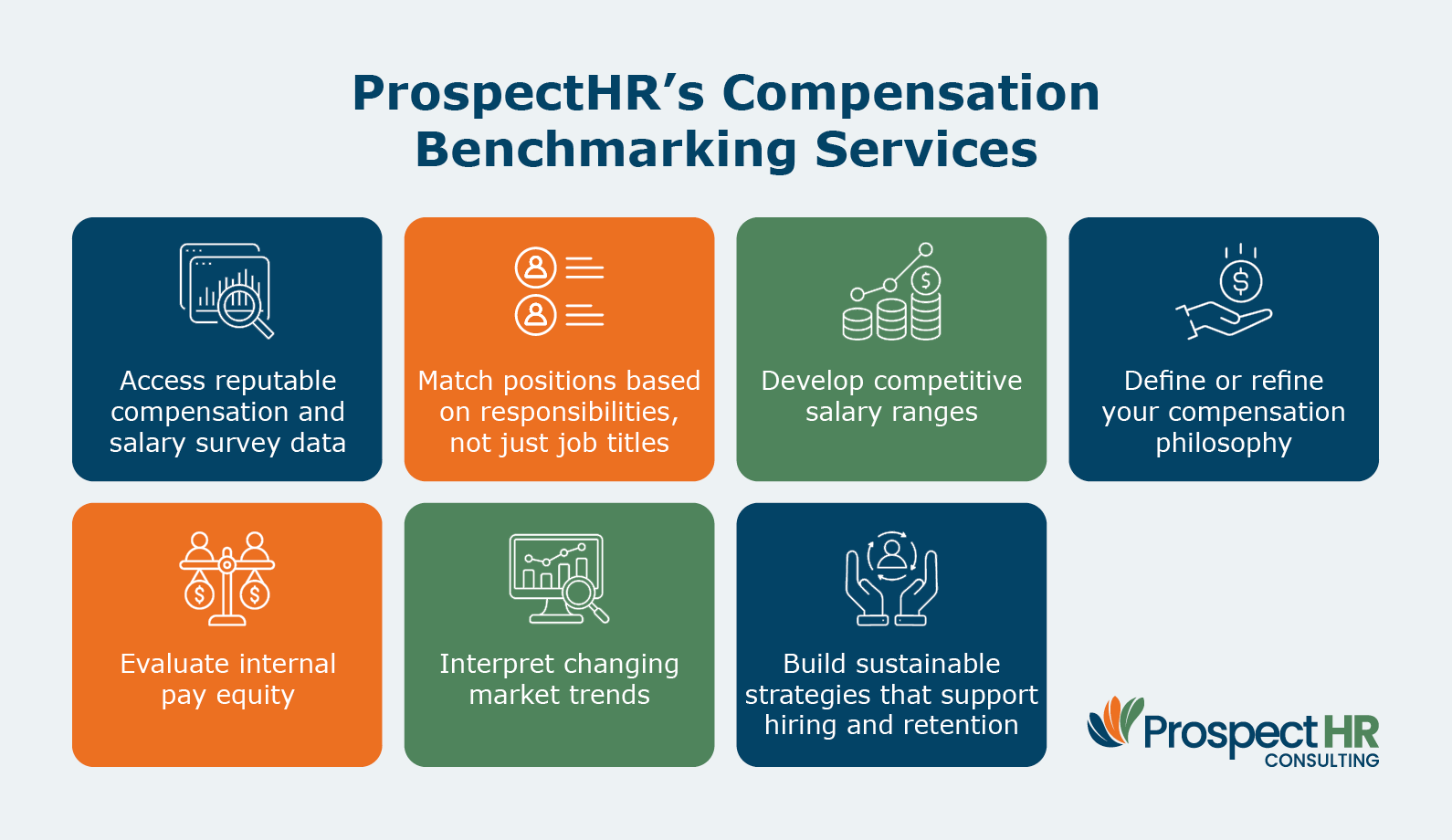
- Access reputable compensation and salary survey data
- Match positions based on responsibilities (not just job titles)
- Develop competitive salary ranges
- Define or refine your compensation philosophy
- Evaluate internal pay equity
- Interpret changing market trends
- Build sustainable compensation strategies that support hiring and retention
Whether you’re benchmarking a handful of key positions or redesigning your organization’s compensation program, ProspectHR provides practical guidance tailored to your business.
If you’re ready to build a compensation strategy that helps you attract and retain top talent, connect with the ProspectHR team to learn how we can help.
Additional HR Resources
Compensation benchmarking helps organizations replace guesswork with reliable market data. By comparing your pay practices to similar organizations, you can develop salary ranges that are competitive, equitable, and aligned with your business goals.
Building a strong compensation strategy is just one part of creating an effective HR program. Continue building your HR knowledge with these related resources:
- Employee Coaching: Complete Overview and How-To Guide: Learn how employee coaching supports professional development, improves performance and engagement, and helps organizations build a culture of continuous growth. Explore coaching best practices and practical tips for creating an effective coaching program.
- Workplace Training: FAQ and 5+ Top Providers to Consider: Discover why workplace training is essential for employee development, compliance, and organizational success. Explore best practices for building an effective training program and compare top workplace training providers to find the right fit for your organization.
- 20+ Nonprofit Consulting Firms for Every Need and Mission: Know what to look for in a nonprofit consulting firm, compare leading providers, and discover how specialized HR consulting can help your organization strengthen its people strategy and maximize its impact.
HR experts can review, improve, and support your compensation benchmarking.
Want to learn more?